Newsletter
Join the Community
Subscribe to our newsletter for the latest news and updates

If you have been watching the AI space in 2026, you have probably heard the word "agent" thrown around a lot. But most tools that claim to be AI agents still need you to hold their hand at every step. Manus AI is different. It is one of the first general-purpose autonomous AI agents that can take a goal, break it down into tasks, and execute them from start to finish — without you having to babysit the process.
In this review, we will break down exactly what Manus AI is, how it works, who it is built for, and whether it lives up to the hype.
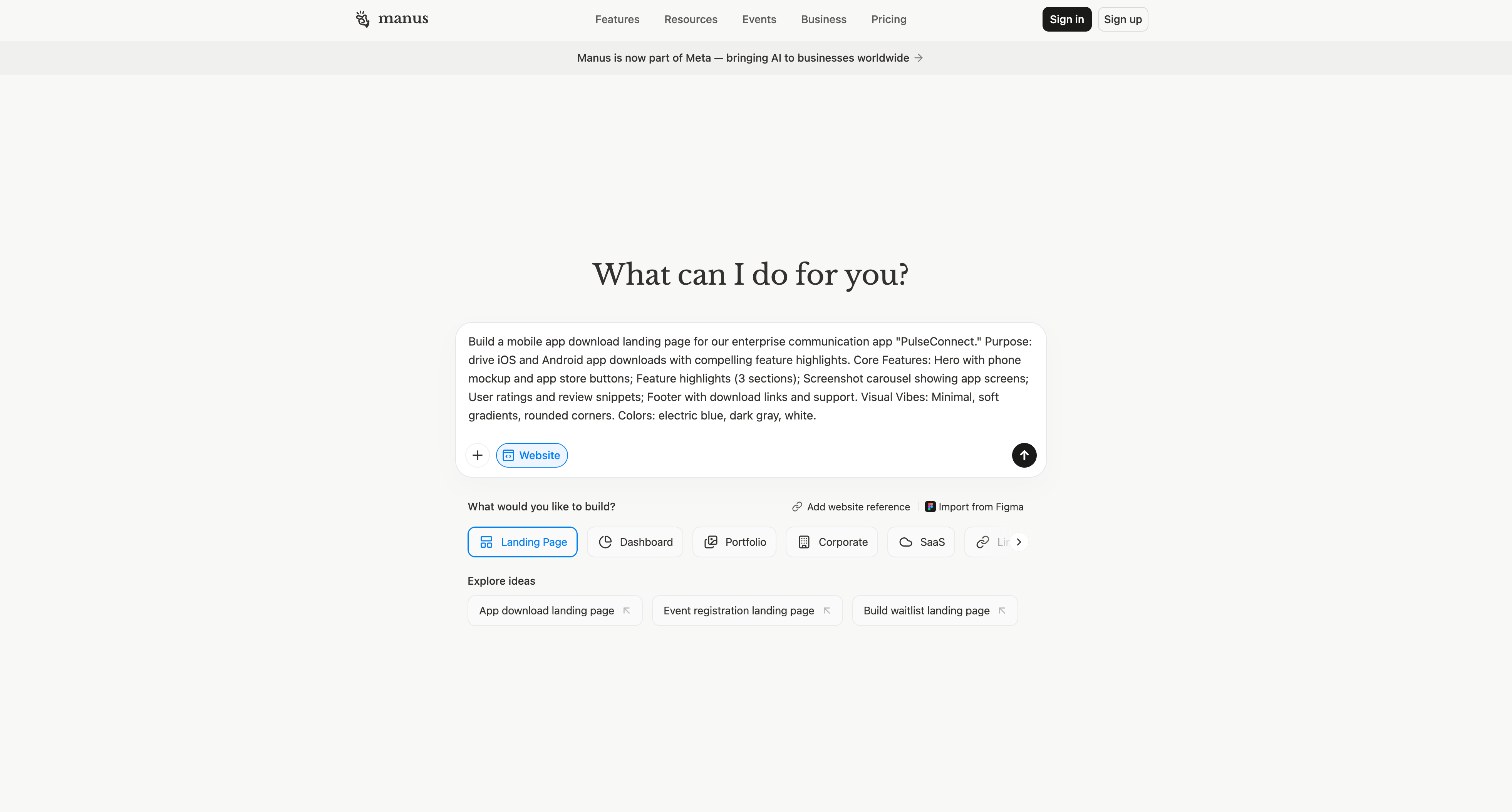
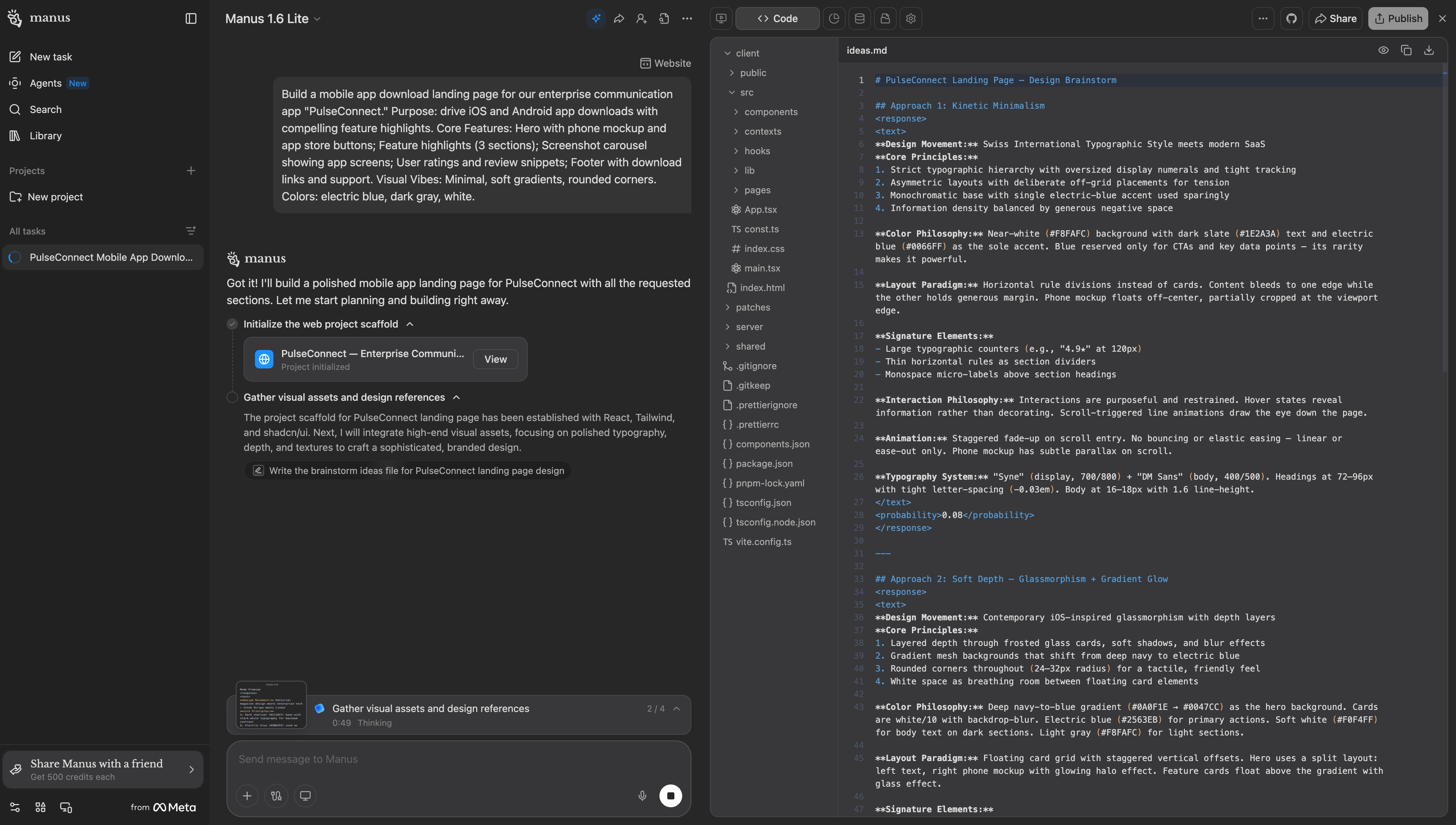
[IMAGE: Manus AI dashboard showing an autonomous task being executed across multiple tools]
What Is Manus AI
Manus AI is a fully autonomous AI agent developed by the Chinese AI startup Monica. Unlike AI assistants that respond to single prompts, Manus operates more like a digital employee. You give it a high-level objective — research a market, build a report, scrape data, write and run code — and it figures out the steps, uses tools, browses the web, writes files, and delivers the finished output.
The name "Manus" comes from the Latin word for hand, which fits the product's philosophy perfectly: it is designed to be the hands that execute the work, not just the brain that thinks about it.
Manus made headlines in early 2025 when it outperformed other AI agents on the GAIA benchmark, a test designed to measure real-world task completion. That performance put it on the radar of developers, founders, and researchers who had been waiting for an agent that could genuinely operate end-to-end.
How Manus AI Works
Manus operates through a multi-agent architecture. When you give it a task, it spins up a team of specialised sub-agents that each handle different parts of the job. One agent might browse the web for research while another writes code and a third organises the output into a structured document.
The core loop works like this:
2 images
It runs inside a sandboxed cloud environment, which means it can open browsers, execute code, read and write files, and interact with web services — all without touching your local machine.
[IMAGE: Manus AI task planning interface showing a multi-step execution plan]
Key Features
Use Cases
Manus AI covers a surprisingly wide range of real-world tasks. Here are the areas where it performs strongest:
Research and Analysis Give Manus a research question and it will browse dozens of sources, synthesise findings, and produce a structured report complete with citations. Tasks that would take a human researcher several hours can be completed in minutes.
Data Collection and Processing Manus can scrape websites, clean data, run analysis scripts, and output results as formatted spreadsheets or documents. This makes it genuinely useful for market research, competitor analysis, and lead generation workflows.
Software Development Assistance Developers use Manus to write boilerplate code, debug scripts, build small utilities, and automate repetitive development tasks. It can read your existing files, understand context, and produce working code rather than just suggestions.
Content Creation Writers and marketers use Manus to research topics, draft long-form content, create outlines, and generate structured documents. It goes further than a standard AI writer because it actually retrieves current information rather than relying on training data alone.
Business Operations Founders and operators use Manus for tasks like competitive intelligence, financial modelling templates, process documentation, and summarising large volumes of information into concise briefings.
[IMAGE: Example of Manus AI completing a market research task with sources and formatted output]
Who Is Manus AI Built For
Manus is a strong fit for anyone who regularly assigns tasks that involve multiple steps, multiple tools, or a combination of research and execution. Specifically:
$0/mo
$39/mo
$199/mo
Pros
Things to Keep in Mind
How Manus Compares to Similar Tools
Manus sits in a category alongside tools like Devin, AutoGen, and OpenAI's own operator-style agents. What differentiates it:
Conclusion
Manus AI represents a meaningful step forward in what AI agents can actually do in 2026. It is not a chatbot with extra features. It is a task execution engine that can take a goal, plan the work, use real tools, and deliver a finished result.
For founders, developers, and operators who feel like they are constantly managing AI tools rather than being helped by them, Manus offers something genuinely different. The agent does the work — you review and direct.
It is still evolving and the credit model means you will want to be thoughtful about what you assign to it. But for the right use cases, it is one of the most capable autonomous tools available right now.

Black Forest Labs FLUX is an advanced AI image generation model that creates high-quality images from text prompts using cutting-edge diffusion technology. The model offers superior image fidelity and prompt adherence compared to many competing AI art generators, making it popular among digital artists and content creators for producing detailed, realistic imagery.



Kling AI is an advanced artificial intelligence image and video generator developed by Kuaishou that creates high-quality visual content from text prompts, supporting both still images and dynamic video sequences up to several minutes long. The platform offers professional-grade AI generation capabilities with realistic rendering, motion control, and various artistic styles, competing directly with other leading AI video generators like Runway and Pika Labs.

Magnific AI is an AI-powered image upscaling and enhancement tool that uses advanced machine learning algorithms to increase image resolution while adding realistic details and improving overall quality. The platform specializes in transforming low-resolution images into high-quality versions with enhanced clarity, making it particularly useful for photographers, designers, and content creators who need to improve image quality for professional use.
About Manus AI Manus AI was built by Butterfly Effect Pte Ltd, the Singapore-based company also known as Monica.im. The project was founded in 2022 by CEO Xiao Hong and co-founder Yichao Ji, originally operating out of Beijing before relocating headquarters to Singapore in mid-2025 to pursue global expansion.
The company raised a total of $85 million across three funding rounds. Early backers included ZhenFund and Tencent. In April 2025, Manus closed a $75 million Series B led by US venture firm Benchmark at a $500 million valuation. By August 2025 the company had reached $90 million in annual recurring revenue, climbing to a $125 million run rate by early 2026 — achieved just eight months after launch.
In December 2025, Meta acquired Manus in a deal valued at over $2 billion, one of the largest AI acquisitions of the year. Manus employees joined Meta's teams, with the technology expected to integrate into Meta AI across Facebook, Instagram, and WhatsApp. As part of the deal, Meta confirmed there would be no continuing Chinese ownership interests and that Manus would discontinue operations in China.